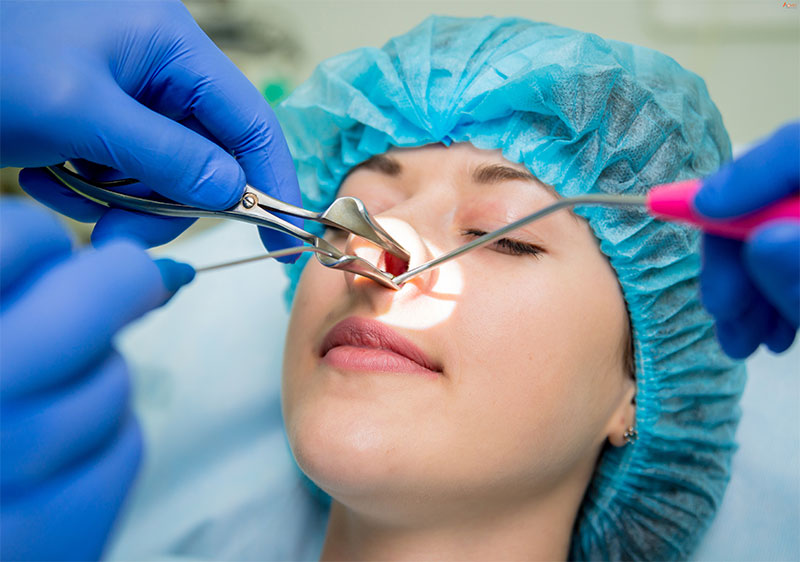
Sinus surgery refers to a group of surgical procedures performed to treat chronic sinusitis or other conditions affecting the sinuses. The specific procedure may vary depending on the individual's condition and the surgeon's approach, but here is a general overview of the most common procedure called functional endoscopic sinus surgery (FESS):
- Anesthesia: Sinus surgery is typically performed under general anesthesia, ensuring the patient is asleep and comfortable throughout the procedure.
- Endoscope insertion: The surgeon inserts a thin, flexible tube with a light and camera (endoscope) into the nostrils. This allows the surgeon to visualize the sinuses and guide the procedure.
- Removal of obstructions: The surgeon uses specialized instruments, inserted through the nostrils, to remove nasal polyps, diseased tissue, or any obstructions that may be blocking the sinus passages. This step aims to improve sinus drainage and restore proper airflow.
- Opening blocked sinuses: The surgeon may enlarge the natural openings of the sinuses or create new openings by removing or reshaping the surrounding tissue, such as removing bone or resecting the mucous membrane. This helps promote better drainage and ventilation of the sinuses.
- Correcting structural abnormalities: If there are structural abnormalities, such as a deviated septum or nasal spur, the surgeon may address these issues during the procedure to improve overall nasal and sinus function.
- Endoscope-guided inspection: Throughout the procedure, the surgeon uses the endoscope to inspect the sinuses, ensuring all necessary areas are treated and any remaining abnormalities are addressed.
- Closure: Once the necessary interventions are complete, the surgeon allows the sinuses to heal naturally without sutures in most cases. Nasal packing or nasal stents may be used to provide support and prevent excessive bleeding during the initial healing phase.
Recovery time after sinus surgery varies depending on the extent of the procedure and the individual's healing process. Some discomfort, swelling, and nasal congestion are common after surgery, but these typically subside within a few days to a few weeks. It's essential to follow post-operative care instructions provided by the surgeon, which may include nasal irrigation, prescribed medications, and avoiding certain activities or environments that may hinder the healing process. Regular follow-up visits with the surgeon will help monitor the healing progress and ensure the best possible outcome.