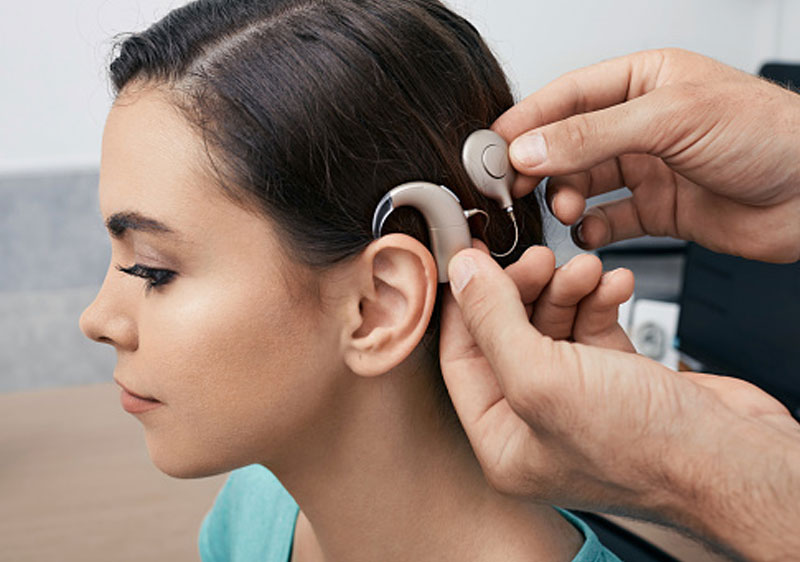
A cochlear implant is a small electronic device that is surgically implanted in the inner ear to provide a sense of sound to individuals with severe to profound hearing loss who do not benefit from conventional hearing aids. It is a highly advanced and effective solution for those who have significant damage to the hair cells in the inner ear or the auditory nerve.
Here are key points about cochlear implants:
How it works: A cochlear implant bypasses the damaged parts of the ear and directly stimulates the auditory nerve. It consists of two main components: an external component and an internal component. The external component, called the speech processor, captures sound from the environment and converts it into digital signals. These signals are then transmitted to the internal component, which is surgically placed under the skin behind the ear. The internal component includes electrodes that are inserted into the cochlea (the hearing organ in the inner ear) to stimulate the auditory nerve.
Candidacy: Cochlear implants are typically recommended for individuals who have severe to profound hearing loss in both ears and receive limited benefit from hearing aids. Candidates undergo a thorough evaluation, including hearing tests and assessments of speech understanding, to determine their eligibility for a cochlear implant.
Surgery: Cochlear implant surgery is performed under general anesthesia. The surgeon makes a small incision behind the ear to access the cochlea. The internal component is carefully inserted into the cochlea, and the receiver-stimulator is secured under the skin. The surgery is usually performed as an outpatient procedure, and most patients can go home the same day.
Activation and Rehabilitation: After a period of healing, typically a few weeks after surgery, the cochlear implant is activated. During activation, the audiologist adjusts the settings of the speech processor to ensure optimal hearing. Following activation, the individual undergoes a period of rehabilitation and auditory training to learn to interpret the sounds transmitted by the cochlear implant.
Benefits and Considerations: Cochlear implants can provide significant benefits to individuals with severe to profound hearing loss, enabling improved speech understanding and communication abilities. However, it is important to note that while cochlear implants can restore a sense of sound, the sound perception may differ from normal hearing, and it requires time and effort to adapt to the new auditory experience.
Follow-up Care: Regular follow-up appointments with the audiologist and the cochlear implant team are essential to monitor the progress, fine-tune the device settings, and provide ongoing support and rehabilitation.
Cochlear implants have revolutionized the lives of many individuals with severe hearing loss, allowing them to communicate and participate more fully in daily activities. The decision to pursue a cochlear implant should be made in consultation with a team of specialists, including an audiologist, otolaryngologist (ENT specialist), and cochlear implant center, who can provide detailed information, evaluate candidacy, and guide through the entire process.