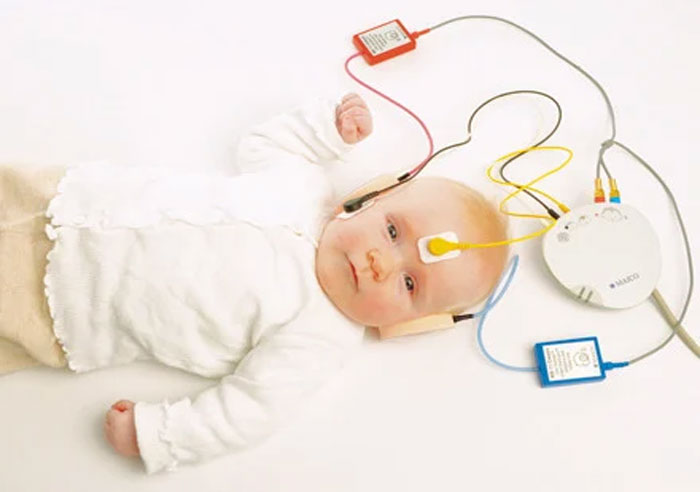
BERA stands for Brainstem Evoked Response Audiometry, also known as Auditory Brainstem Response (ABR) or Brainstem Auditory Evoked Potential (BAEP). It is a diagnostic test used to assess the electrical activity in the auditory pathway from the cochlea to the brainstem.
During BERA testing, small electrodes are placed on the scalp and earlobes of the patient. The electrodes pick up the electrical responses generated by the auditory system in response to sound stimuli. The patient is typically seated in a quiet room, and a series of clicks or tone bursts are presented to the ears through earphones or insert earphones.
The responses from the electrodes are recorded and analyzed by a computer. The test measures the time it takes for the electrical signals to travel from the cochlea to the brainstem and provides information about the integrity of the auditory pathway.
BERA testing is useful in several clinical situations, including:
Newborn hearing screening: BERA can be used to screen the hearing of newborns, especially in cases where behavioral testing is not feasible or reliable.
Diagnosis of hearing loss: BERA can help determine the presence and type of hearing loss, particularly in individuals who are unable to provide reliable behavioral responses or who have complex hearing loss.
Assessment of auditory nerve function: BERA can evaluate the function of the auditory nerve, which is responsible for transmitting auditory signals from the cochlea to the brainstem.
Neurological assessment: BERA can provide information about the integrity of the brainstem and help diagnose neurological conditions that affect the auditory pathway.
BERA testing is safe and non-invasive, and it does not require any active participation from the patient. It is commonly used in both pediatric and adult populations and can provide valuable information for diagnosis, treatment planning, and monitoring of auditory disorders.