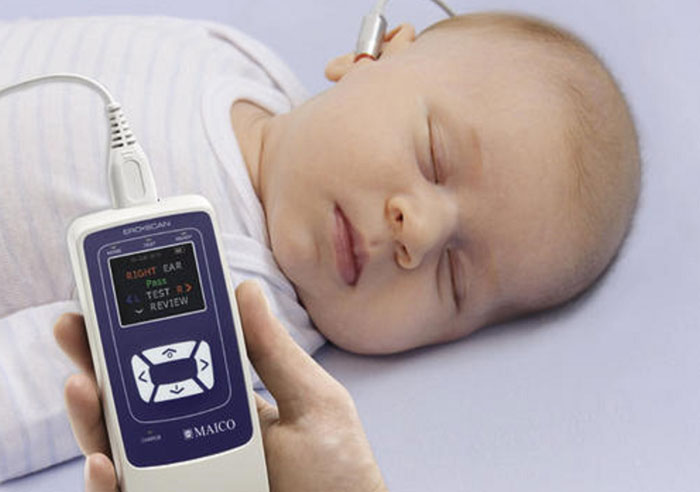
OAE stands for Otoacoustic Emissions, which are sounds generated by the inner ear in response to external auditory stimuli. OAE testing is a non-invasive diagnostic tool used to assess the function of the cochlea, the sensory organ responsible for hearing.
During OAE testing, a small probe is placed in the ear canal. The probe emits a series of low-level sounds, such as clicks or tones, and also contains a sensitive microphone to detect the emissions produced by the cochlea in response to these sounds. The emissions are then recorded and analyzed by a computer.
There are two types of OAEs:
Spontaneous Otoacoustic Emissions (SOAEs): These are low-intensity sounds that occur in the absence of external stimulation. SOAEs are present in some individuals without hearing loss and are thought to be a result of the normal functioning of the cochlea.
Evoked Otoacoustic Emissions (EOAEs): These are sounds generated in response to specific auditory stimuli. EOAEs can be further classified into Transient Evoked Otoacoustic Emissions (TEOAEs) and Distortion Product Otoacoustic Emissions (DPOAEs).
TEOAEs: TEOAEs are evoked by a brief click or tone stimulus. The emitted sound is recorded within a short time window after the stimulus presentation. TEOAE testing is commonly used for newborn hearing screening and to assess cochlear function.
DPOAEs: DPOAEs are evoked by two simultaneous tones of different frequencies presented to the ear. The cochlea responds by generating additional tones, which are measured and analyzed. DPOAE testing is often used to assess the integrity of the outer hair cells in the cochlea.
OAE testing is useful in several clinical settings, including newborn hearing screening, monitoring the effects of ototoxic medications, and evaluating hearing loss in difficult-to-test populations, such as infants, individuals with developmental disabilities, or patients who cannot provide reliable behavioral responses. OAEs provide valuable information about the integrity and function of the cochlea and can assist in the diagnosis and management of hearing disorders.