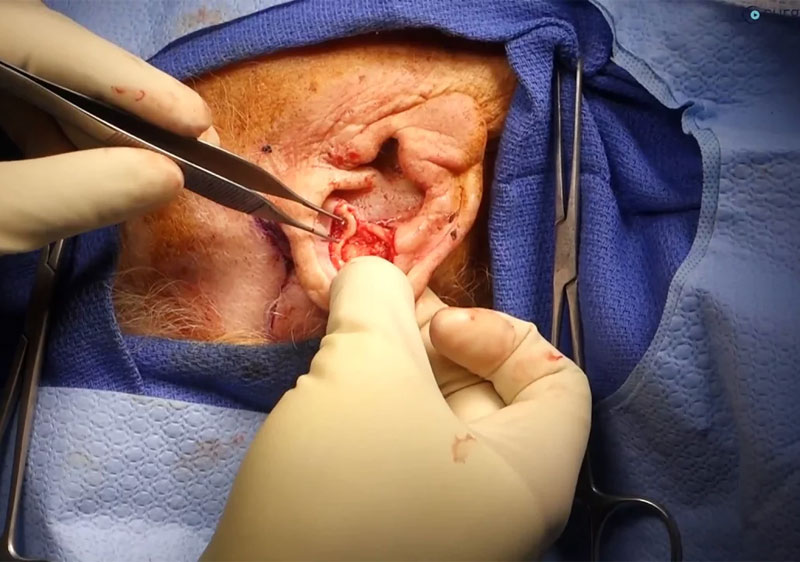
Ear surgery, also known as otologic surgery, refers to a range of surgical procedures performed to address various conditions affecting the ear. Here is an overview of common types of ear surgery and their treatments:
- Tympanoplasty: Tympanoplasty is a surgical procedure to repair a perforated eardrum or reconstruct the middle ear. It involves grafting tissue onto the eardrum to close the hole and restore its normal function. This procedure can help improve hearing and prevent recurrent ear infections.
- Mastoidectomy: Mastoidectomy is performed to treat infections or complications in the mastoid bone, located behind the ear. It involves removing infected or damaged tissue and can be necessary to treat chronic ear infections, cholesteatoma (a benign growth in the middle ear), or other conditions that affect the mastoid bone.
- Stapedectomy: Stapedectomy is a surgical procedure used to treat a specific type of hearing loss called otosclerosis. It involves removing the fixed stapes bone and replacing it with a prosthesis. This procedure can help improve hearing by restoring the movement of the middle ear bones.
- Cochlear Implant Surgery: Cochlear implant surgery is performed for individuals with severe to profound hearing loss who do not benefit from conventional hearing aids. It involves the insertion of an electronic device, called a cochlear implant, into the inner ear. The implant bypasses the damaged parts of the ear and directly stimulates the auditory nerve, allowing individuals to perceive sound.
- Ossiculoplasty: Ossiculoplasty is a surgical procedure to repair or reconstruct the tiny bones (ossicles) in the middle ear. This procedure can be performed to restore hearing in cases where the ossicles are damaged or missing due to trauma, chronic ear infections, or congenital abnormalities.
- Tumor Removal: Ear surgery may also be performed to remove benign or malignant tumors affecting the ear or the surrounding structures. The specific approach and procedure depend on the type, size, and location of the tumor.
The specific treatment and surgical approach depend on the individual's condition and the expertise of the otolaryngologist (ENT specialist). It is essential to consult with a qualified ear surgeon to discuss the specific procedure, potential risks and benefits, and post-operative care requirements associated with the planned ear surgery.